
Why the Green Wedge remains the Peninsula’s line in the sand…
Warnings from local politicians and councillors in recent days and weeks has put the Peninsula’s Green Wedge front and centre.
Nepean MP Anthony Marsh raised the alarm in State Parliament over a private proposal for more than 2,000 homes on Green Wedge land between Mornington and Mount Martha.
The proposal remains just that. No rezoning has been approved or formally exhibited, and both Labor and the Liberals have since committed to retaining the existing Urban Growth Boundary.
But at Tuesday night’s Mornington Peninsula Shire meeting, Cr Kate Roper warned of another danger—the gradual erosion of the Green Wedge through individual planning decisions.
Arguing successfully against a contractor’s depot in Pearcedale, Roper said the Green Wedge was being “chipped away bit by bit” by inappropriate uses.
Her warning goes to the heart of a protection with more than half a century of history.
Melbourne’s Green Wedge concept was formalised by Henry Bolte’s Liberal government in its 1971 metropolitan planning policies. Rupert Hamer, then the minister responsible for metropolitan planning, drove the corridor-and-wedge model before succeeding Bolte as premier in 1972.
Instead of allowing Melbourne’s suburbs to spread evenly, growth was directed along defined corridors, leaving non-urban wedges between them. The aim was to contain sprawl, conserve natural and agricultural resources and limit the cost of extending infrastructure.
The principle was reinforced in the early 2000s through the Urban Growth Boundary, Green Wedge zones and statutory planning controls.
On the Peninsula, Green Wedge land covers about 70 per cent of the Shire. It supports farming, wildlife habitat, water catchments, recreation and tourism, while preserving the rural landscapes and separation between townships that define the region.
The danger is not necessarily one enormous development. It may be a succession of smaller decisions, each argued to be reasonable in isolation.
Commercial uses can displace farming, fragment habitat and encourage rising land values and speculation. Each approval can also establish an argument for the next.
Melbourne needs more housing, but local concern now extends across political and council lines. The question is whether that growth can be accommodated within established townships—or whether pressure will begin chipping away at a boundary intended to be permanent.
Once the Green Wedge becomes another outer suburb, it cannot be put back.
The stories that matter most to Frankston
and the Mornington Peninsula
RPP News —Monday to Friday
0600-0900- Midday – 1600-1800
Images:
Looking south from Arthurs Seat, the Peninsula’s bushland and coastal townships sit side by side—a balance the Green Wedge was created to preserve. Picture: Brendon Telfer
Looking northward. Picture: Brendon Telfer
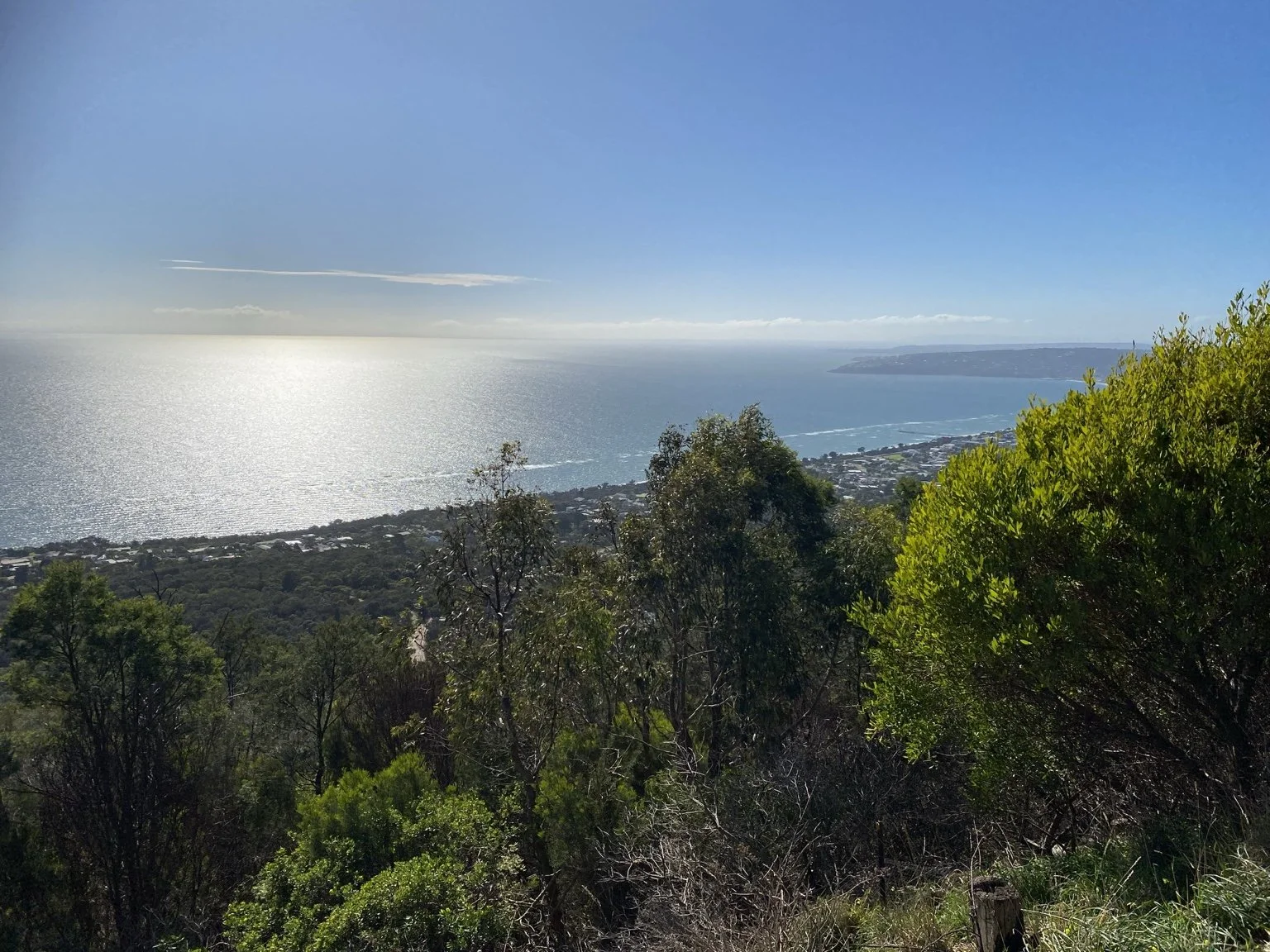
Looking northward. Picture: Brendon Telfer